Board & Beyond
Can a professionally managed horse boarding farm cover its costs and replace the founder’s daily labor?
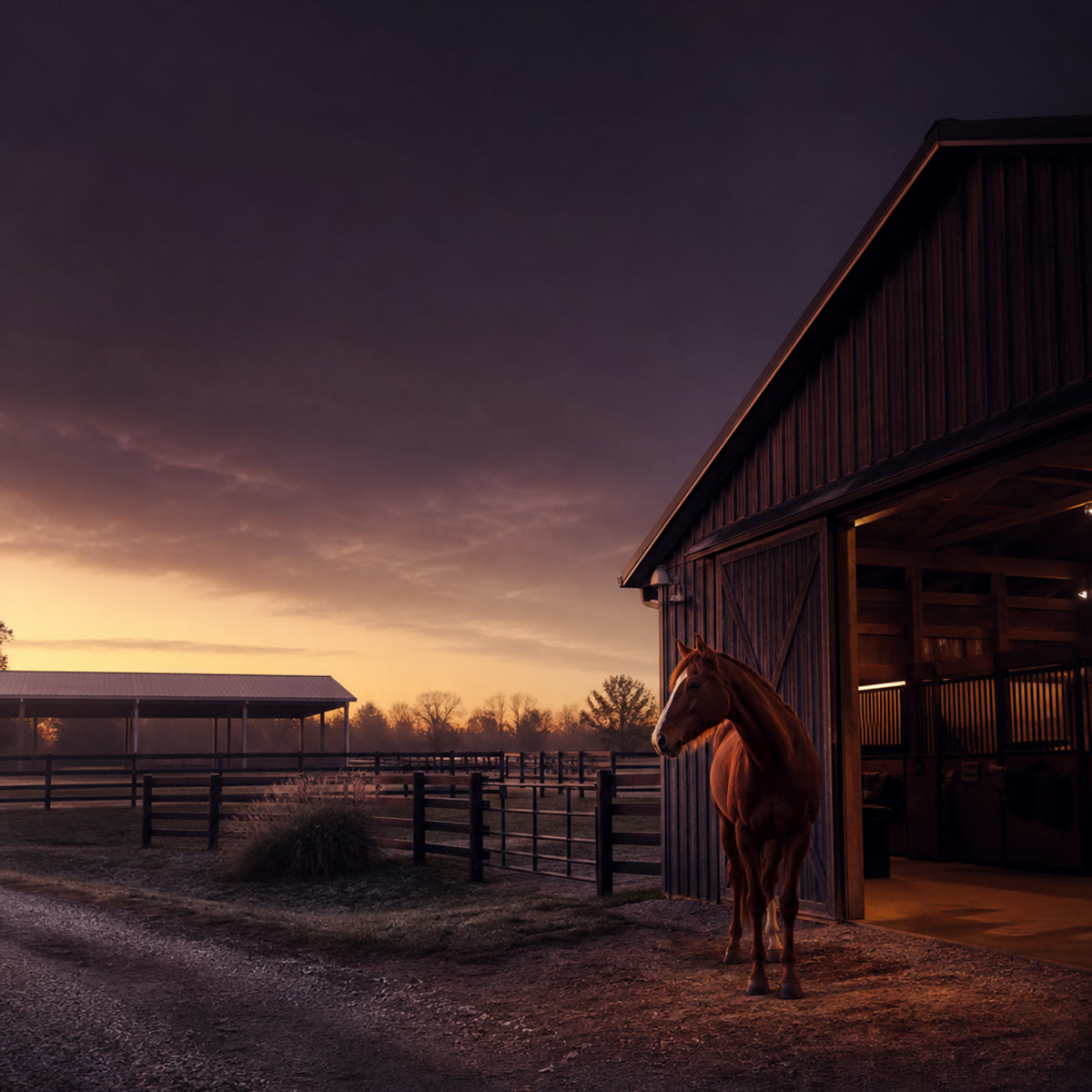
Can recurring stall revenue cover the property, the care, and the person who replaces the founder?
The trap is assuming a beautiful farm and premium pricing automatically create profit when horses, staff, and debt keep charging every day.
Tests whether trust, communication, and premium care can support a local brand people will pay for.
Separates operating profit from property upside and pressures the model on occupancy, labor, and debt.
Looks for systems that help without pretending software can replace judgment, staffing, or animal care.
The math that has to work
SARAH'S BACK-OF-NAPKINAt 22 occupied stalls, the model reaches about $23,500 in monthly revenue with add-ons, but Sarah says the pre-debt cushion may still only be $3,000 to $5,000.
That leaves very little room for a large mortgage, and a few vacancies can wipe out the margin fast.
This week on Tri Diligence: Board & Beyond, a US-focused horse boarding farm designed to operate without the owner doing the daily physical work.
The central fight is simple: can recurring stall revenue cover the property, the care, and the person who replaces the founder? The answer depends on boarding prices, occupancy, usable land, staffing, feed and bedding costs, maintenance, insurance, local rules, and what happens at the farm on weekends, holidays, and emergency nights.
- Jake (the marketer) tests whether safety, communication, turnout quality, and dependable care can support a premium position in an intensely local, trust-driven market.
- Sarah (the backer) separates real operating profit from hoped-for property appreciation and asks how many occupied stalls are needed before the mortgage, workers, and manager are paid.
- Ryan (the technologist) examines which operational systems should be bought, where monitoring and forecasting can help, and why animal-care decisions cannot simply be automated away.
The hosts compare self-care, partial, pasture, and full-board models; examine add-ons and expansion traps; and ask whether buying the property should be the last step rather than the first. Each ends with a verdict and one smaller test to run before committing to a large farm.
Transcript
Welcome to Try Diligence, where three hosts perform due diligence and occasionally injure a perfectly good slogan. I'm Jake, the marketer. Today, we're buying a horse farm.
No, we're analyzing one. I'm Sarah, the investor, and that distinction has already saved us several million dollars.
I'm Ryan, the tech lead. I have brought software, skepticism, and absolutely no intention of cleaning a stall.
The pitch is Board and Beyond, a professionally managed American boarding farm. Owners pay monthly for stalls, turnout, feeding, riding facilities, and optional care, while the founder builds a team and escapes daily physical work.
That last phrase is the whole investment memo. Recurring revenue sounds lovely. Recurring manure is less often featured in pitch decks.
And horses don't recognize weekends, software outages, or the founder's spiritual journey toward passive income.
Still, this is a real market. The American Horse Council reports six point seven million horses, two point two million jobs, and one hundred seventy-seven billion dollars in total United States economic impact.
Big category, yes. But our customer is narrower. Sixty-two percent of horse owners already own or lease property. I want affluent, time-constrained recreational owners within perhaps forty-five minutes of the barn.
Exactly. Not bargain hunters. The ideal customer values reliable turnout, clean stalls, fast communication, and knowing that someone competent noticed Daisy looked wrong at breakfast.
That customer also generates useful operational data. Feeding instructions, medications, behavior, turnout pairings, emergency contacts. If those live on sticky notes, this business has already chosen chaos.
Customer segmentation must also exclude some revenue. Trainers can fill ten stalls quickly, but one trainer leaving creates ten vacancies. No anchor tenant should control the barn's oxygen supply.
I'd cap any trainer or lesson program at roughly one quarter of occupied stalls. They create referrals and community, but the brand remains dependable boarding, not one charismatic trainer's kingdom.
The value proposition isn't a wooden box for a horse. It's trusted care plus time returned to the owner. Photos, predictable routines, good footing, safe fencing, and fewer anxious drives to check whether somebody remembered the blanket.
Trust supports premium pricing only when operations prove it. One missed medication or preventable injury can erase years of cheerful social media.
We can create evidence without pretending technology replaces judgment. Time-stamped task completion, medication logs, water checks, incident records, and customer updates provide an auditable care trail.
And that trail becomes marketing. A weekly care summary isn't merely administration. It tells an owner, quietly and repeatedly, your horse is known here.
Now pricing. Industry snapshots put pasture board around three hundred to seven hundred dollars monthly, partial board around six hundred to twelve hundred dollars, and full care from roughly six hundred into several thousand at premium facilities.
I'd avoid the bottom. Assume eight hundred fifty dollars for standard full board and eleven hundred dollars for premium care in a solid metropolitan fringe market.
Then show me a barn, not a vibe. Say twenty-four stalls, twenty-two occupied, and average monthly revenue of nine hundred fifty dollars per horse. That produces twenty thousand nine hundred dollars before extras.
Add trailer parking, blanketing, appointment holding, and medication administration. UC Davis separately charges for services like turnout and trailer parking, so customers already understand itemized convenience.
Assume add-ons average one hundred twenty dollars per occupied stall. Total monthly revenue becomes about twenty-three thousand five hundred dollars. Now the unpleasant side.
You have a special voice for the unpleasant side.
Feed, bedding, manure, supplies, and variable labor might consume four hundred fifty dollars per horse, or nine thousand nine hundred dollars. Add a manager at five thousand five hundred dollars and payroll burden, insurance, utilities, repairs, and administration.
And backup coverage. One manager isn't a staffing model. It's a future apology. You need documented shifts, at least two trained care workers, and an on-call escalation plan.
Precisely. Before debt service, this scenario may leave only three thousand to five thousand dollars monthly. A large mortgage can eat that before the tractor develops opinions.
Could premium positioning lift the average to eleven hundred dollars?
Perhaps, but premium means better arenas, footing, fencing, turnout, labor, and communication. Price doesn't rise alone. It brings expensive friends.
Self-care isn't the escape hatch either. Customers may feed and clean, but the operator still manages access, safety, disputes, emergency coverage, biosecurity, and the person who forgets every Sunday.
Then offer limited partial board only where routines stay standardized. Ten bespoke care plans aren't customer centricity. They're a hostage situation with labeled feed buckets.
Vacancy matters brutally. At twenty-two occupied stalls, losing four customers removes more than four thousand dollars of monthly revenue while most property and management costs remain.
Acquisition is local and trust-heavy. Start with veterinarians, farriers, trainers, tack stores, horse associations, local search, barn tours, and owner referrals. Beautiful advertising gets attention. A credible recommendation closes.
The website should show real turnout schedules, facility policies, service levels, availability, and staff qualifications. No custom commerce platform. Use a strong content site, electronic applications, and established barn software.
I want a referral benefit, but not cheap discounts. Give an existing customer a useful care credit after the referred horse stays three months. That protects the premium signal.
Assume customer acquisition costs around three hundred dollars through blended referrals and local marketing. If monthly contribution after direct care is four hundred dollars, payback can be under one month, but only if retention is genuinely long.
Retention comes from consistency, community, and switching friction. Owners form routines around a barn. Monthly updates, quarterly care reviews, clinics, and transparent issue handling make staying feel safer than shopping.
Don't confuse switching friction with loyalty. If turnout is poor or staff churn, horse owners talk. A local reputation can collapse faster than your carefully calculated L-T-V.
Technology supports the relationship, but buy before building. Use barn-management software for billing, contracts, records, and care instructions, accounting software for the books, and task tools for staff and maintenance.
What would you actually build?
Initially, almost nothing. Integrations and dashboards, perhaps. The scarce resources are safe land, water, fencing, stalls, riding space, skilled people, working capital, and a trusted operating brand.
Capital arrives in cliffs. One additional horse adds feed and labor gradually. A new barn, arena, well, drainage system, tractor, or fire upgrade can require hundreds of thousands of dollars at once.
Acreage can't be reduced to one magic ratio. Climate, soil, pasture quality, rainfall, manure handling, zoning, and turnout design matter. Twenty-four horses on thirteen acres may work with intensive management, but it isn't automatically good pasture.
The competitive standard also includes more than stalls. Current listings advertise arenas, multiple paddocks, pasture rotation, trailer access, and storage. Customers compare the whole experience.
One Pennsylvania example lists twenty-six stalls on thirteen acres at roughly one million seven hundred fifty thousand dollars. The question isn't whether that sounds impressive. It's whether boarding cash flow supports the purchase.
Before any offer, specialists must verify zoning, commercial boarding permission, water capacity, drainage, manure plans, fire access, environmental rules, and insurance. Requirements vary by state, county, and municipality.
Also boarding contracts, liability waivers, late-payment procedures, lien rights, animal-welfare duties, and custody responsibilities. A lawyer and equine insurer are key partners, not decorative professional services.
Other partners include feed and bedding suppliers, veterinarians, farriers, manure removal, equipment repair, and emergency transport. The barn should coordinate care without implying it provides veterinary treatment.
The core activities are relentlessly unglamorous. Feeding accurately, checking horses, cleaning stalls, managing turnout, maintaining fencing and footing, scheduling staff, controlling disease, documenting incidents, and communicating before small problems become dramatic ones.
That reliability is the brand. The logo may contain a tasteful horse. The product is somebody showing up during freezing rain.
Now the required A-I question. For us, A-I can forecast feed demand, optimize shifts, flag unusual water consumption, summarize care updates, inspect pasture images, and detect movement anomalies from cameras.
With a human deciding what an anomaly means. A camera alert can't diagnose colic, approve medication, or replace qualified observation.
Correct. Against us, a funded competitor could standardize operations across ten facilities, negotiate cheaper supplies, centralize administration, predict vacancies, and offer owners polished round-the-clock monitoring. Our software advantage would evaporate.
The defense is local trust plus operational data used well. Know each horse, keep staff, respond quickly, and produce evidence of consistent care. A chain can copy features more easily than relationships.
Risk round. What must be true? Average revenue must cover real labor and management, occupancy must remain above roughly eighty-five percent, add-ons must contribute after labor, and debt can't depend on appreciation.
The founder also needs proof that operations survive two consecutive staff absences without personally taking every shift. Until then, owner-independent is a slogan, not a system.
Demand must be specific, too. I want twenty interviews with target owners, competing-barn visits, and paid reservation interest. Compliments about the concept don't feed horses.
My verdict is wait. Separate the property investment from the boarding company. First, build a twelve-month operating model for twelve, twenty-four, and forty horses, including vacancy, manager pay, repairs, and debt.
My verdict is test, not build. Lease or manage stalls at an existing facility for six to twelve months. My first step is mapping every daily task, failure point, labor minute, and escalation decision.
My verdict is cautiously invest in validation. The customer need is emotional, recurring, and valuable. My first step is selling ten premium boarding commitments through local equine partners before anyone shops for picturesque acreage.
If that pilot pays a real manager, retains customers, and still produces cash after honest costs, then evaluate property. If it only works because the founder supplies free labor, buy a nice pair of boots instead.
Much cheaper, although Jake will somehow turn the boots into a lifestyle brand.
Board and Beyond merchandise is phase nine. For now, validate the boarding operation first, treat real estate returns separately, and never ask appreciation to shovel the stalls.
That's our episode of Try Diligence. The horses may be majestic, but the spreadsheet still gets the final ride.
Validate the boarding operation first and treat real estate returns separately; never ask appreciation to shovel the stalls.